
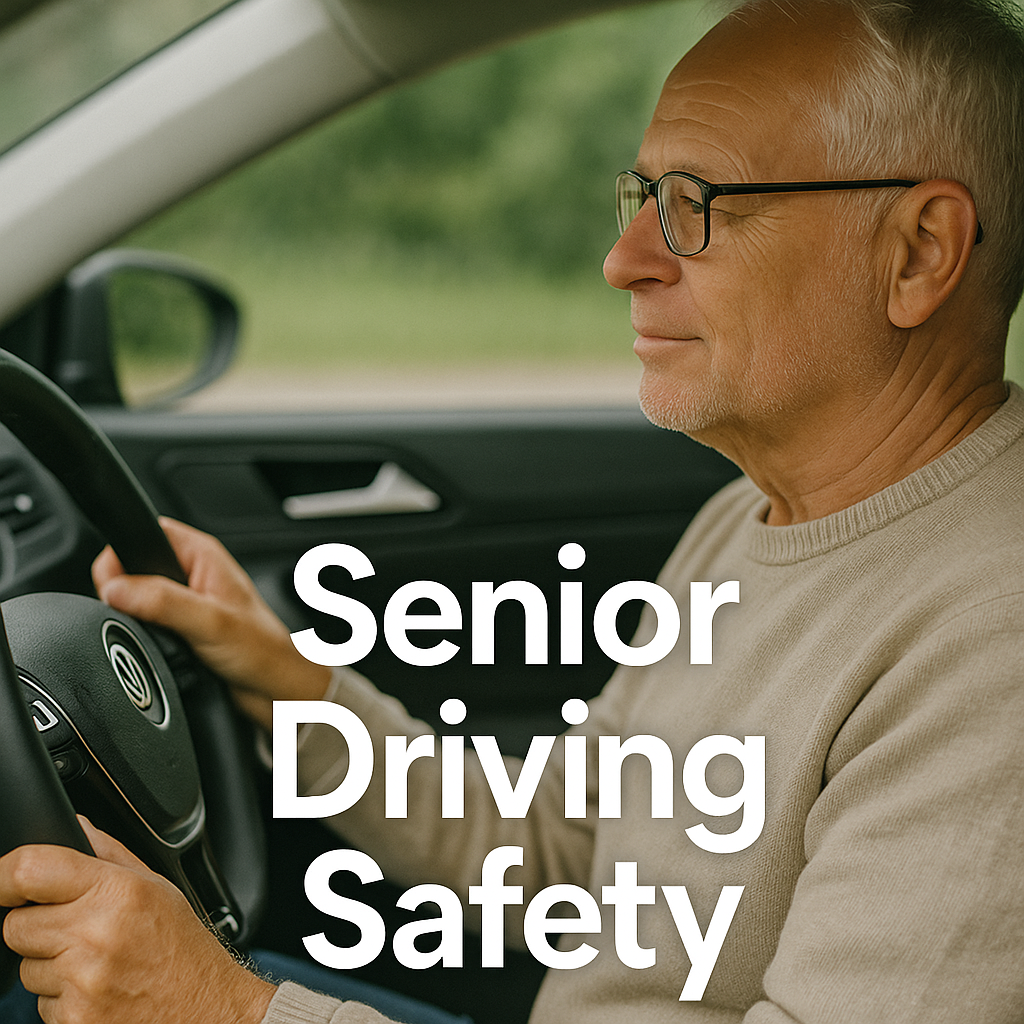
Senior Driving Safety: Tips for Staying Safe and Independent on the Road
Driving is more than just a way to get from place to place; it’s a symbol of independence and freedom. For many older adults, staying behind the wheel helps maintain social connections and access to essential services. But as we age, physical and cognitive changes can affect driving ability. The good news? With a few smart strategies, seniors can stay safe and confident on the road.
- Stay on Top of Vision and Hearing
-
- Get regular eye exams: Vision can change with age, affecting depth perception, night vision, and peripheral awareness.
- Check your hearing: Hearing loss can make it harder to detect sirens, horns, or approaching vehicles.
Tip: Keep your windshield, mirrors, and headlights clean for better visibility.
- Be Aware of Cognitive and Physical Changes
-
- Slower reaction times and stiff joints can make it harder to respond quickly.
- Memory issues or confusion may affect navigation or decision-making.
Tip: Talk to your doctor about how medications or health conditions might impact your driving.
- Choose Safe Driving Conditions
-
- Avoid driving at night, during bad weather, or in heavy traffic if it feels stressful.
- Plan routes ahead of time and stick to familiar roads.
Tip: Use GPS or a smartphone app with voice directions to reduce distractions.
- Keep Your Car Senior-Friendly
-
- Drive a vehicle with good visibility, automatic transmission, and safety features like backup cameras and blind-spot warnings.
- Adjust your seat, mirrors, and steering wheel for comfort and control.
Tip: Consider taking a senior driving course to refresh your skills and learn about new car technologies. Programs like the AARP Smart Driver™ course offer valuable updates and may even reduce your car insurance.
- Watch for Warning Signs
You or your loved ones might notice:
- Frequent close calls or minor accidents.
- Getting lost on familiar routes.
- Difficulty staying in your lane.
- Trouble judging gaps in traffic.
Tip: If these signs appear, consider a professional driving assessment.
- Know When It’s Time to Transition
Giving up driving is a tough decision, but safety comes first. If driving is no longer safe:
-
- Explore transportation alternatives like senior shuttles, ride-sharing, or public transit.
- Stay socially active to avoid isolation.
- Talk openly with family about your needs and concerns.
Driving safely as a senior is possible with the right precautions and support. Regular checkups, honest self-assessment, and a willingness to adapt can help you stay independent and confident behind the wheel.
Silver Angels is a licensed, non-medical home care agency that helps individuals remain safe, independent, and comfortable in their own homes. Services like our Personal Emergency Response Systems offer added peace of mind for seniors and their families. Please call Silver Angels at 833-564-6773 and choose Ext 5 to discuss our services or visit www.SilverAngels.com for more information.